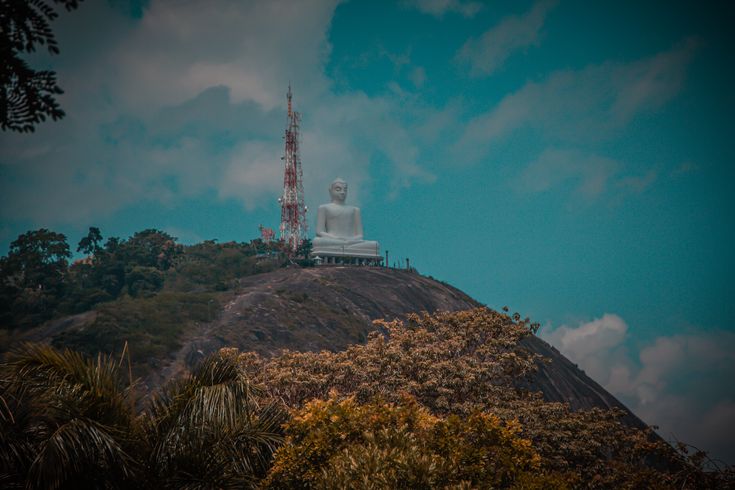
Athugala Rock
Athugala Rock Temple has obtained its name as the stone is an elephant appearance and is 325 meters
high. The locals in the vicinity myth that the rock has formed due to animals turning into rocks
inadequate to withstand the harsh dryness.
There is a temple on the summit of the rock and a giant Samadhi Buddha statue overlooking the city
of Kurunegala. However, there is a temple on the top of the cliff, people from many faiths visiting
the temple to enjoy the hike and the adventurous journey towards the top of the peak.
...
You could use the stairs to reach the top of the mountain or use the vehicle to climb up. Hiking your
route to the top of the hill is more pleasant than using a car to reach the top. Walking towards the
top of the mountain is favoured by many people.
The most suitable time to start hiking up the rock is during or after the sunset, giving a panoramic
view of the Kurunegala city.
The Myth of the Rock's Formation
Legend has it that the animals inhabiting the area, unable to endure the harsh drought conditions,
transformed into stone formations. The rock at Athugala took the shape of an elephant, symbolizing
the strength and resilience of the animals that succumbed to their surroundings. This myth adds an
aura of mystique and intrigue to the already awe-inspiring rock formation.
The Temple and Samadhi Buddha Statue
Perched atop the rock, there stands a majestic temple that draws visitors from various faiths. The
temple not only offers a place of worship but also provides a gateway to an exhilarating hiking
experience. At the pinnacle of the rock, overlooking the city of Kurunegala, stands a remarkable
Samadhi Buddha statue. This snow-white statue captures the attention of all who lay eyes upon it,
seemingly floating in the distance.
Accessing the Rock Temple
To reach the top of Athugala, visitors have two options: ascend by climbing the stairs or use a
vehicle for convenience. While the vehicle may provide a quicker ascent, many individuals, both
young and old, prefer the adventurous journey of hiking to the summit. Hiking towards the top of
the hill allows one to immerse themselves in the natural beauty and experience the surrounding
environment more intimately.
The Best Time to Visit
Embarking on the hike up Athugala Rock during or after sunset offers a truly magical experience.
As the sun sets, painting the sky in shades of pink and purple, the panoramic view of Kurunegala
city unfolds before your eyes. The once bustling lights of vehicles and vibrant shops illuminate
the cityscape, creating a breathtaking vista. This time of day adds an extra layer of enchantment
to the journey and rewards hikers with a truly memorable sight.
The Athugala Rock Temple offers a unique blend of natural wonders, religious significance,
and adventure. The myth surrounding its formation, the temple perched atop the rock, and the
magnificent Samadhi Buddha statue all contribute to its allure. Whether you choose to hike or
take the vehicle, the journey to the top promises to be an unforgettable experience. Witnessing
the panoramic view of Kurunegala city at sunset and encountering the ethereal snow-white Buddha
statue will leave you in awe of the beauty that unfolds at Athugala Rock Temple.
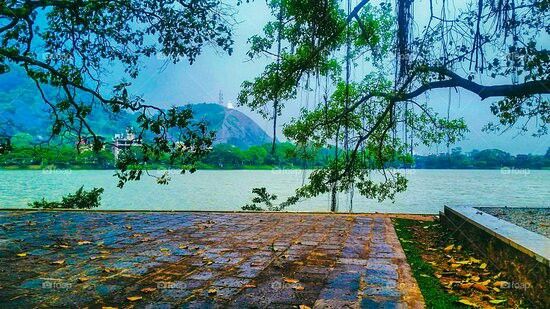
Kurunegala Lake
Kurunegala Lake is next to Kurunegala North and is placed in North Western, Sri Lanka. Kurunegala Lake has
a length of 3.68 kilometers. It is also known as Rantalia Lake or Kurunegala tank. It is a marvelous water body,
that is situated away from the metropolis traffic and on the brink of the main city
...
The livelihood of people
Kurunegala Lake may be described as the lifeblood of the people of Kurunegala. It is providing water
for agriculture while enhancing the natural beauty of the town. The lake occupies a huge part of the cit
and positioned in the center of the city. Kurunegala Lake is given a facelift during the last numerous years.
Today it has a beautiful, easy, and nicely maintained green surrounding. It makes a stunning sight over the
city in the days when the lake is full of freshwater after the rain. The modern promenade around the lake provides
a tempting atmosphere for a night walk.
Functions held at the place
Sitting near the lake or walking around it and enjoying the view is, of course, free of price. While enjoying your
time in the lake, you could head to an eating place or bar to enjoy the sunset. It must also be kept in a note that
the locals of Kurunegala love to hold their marriage ceremonies at this place due to the picturesque view it
offers.
Development of the site
The Urban Development Authority has already undertaken the beautification of Kurunegala Lake surroundings as one
of the priority projects intending to enhance the cultured condition of the town while the Lake beautification
undertaking encompasses 3.5 km strolling track with a cycle lane, planting trees, offering vehicle parking spaces,
trimming of existing trees, lights of the project area, etc. The UDA has prepared a plan including the above features
and the total challenge cost is very high. Kurunegala city is being developed as the main urban center in the North
Western Province. Although the population in the municipal limit is recorded as 30,000, the daily commuter populace
is around 0.5 million and the town is growing fast because of facilities available with road linkages.Therefore, it
has become essential to offer open areas and recreational and enjoyment arenas to cater to the present and future
demands of the population. The UDA being the principal planning agency is guiding the improvement based totally
on the town development plan while implementing the action projects.
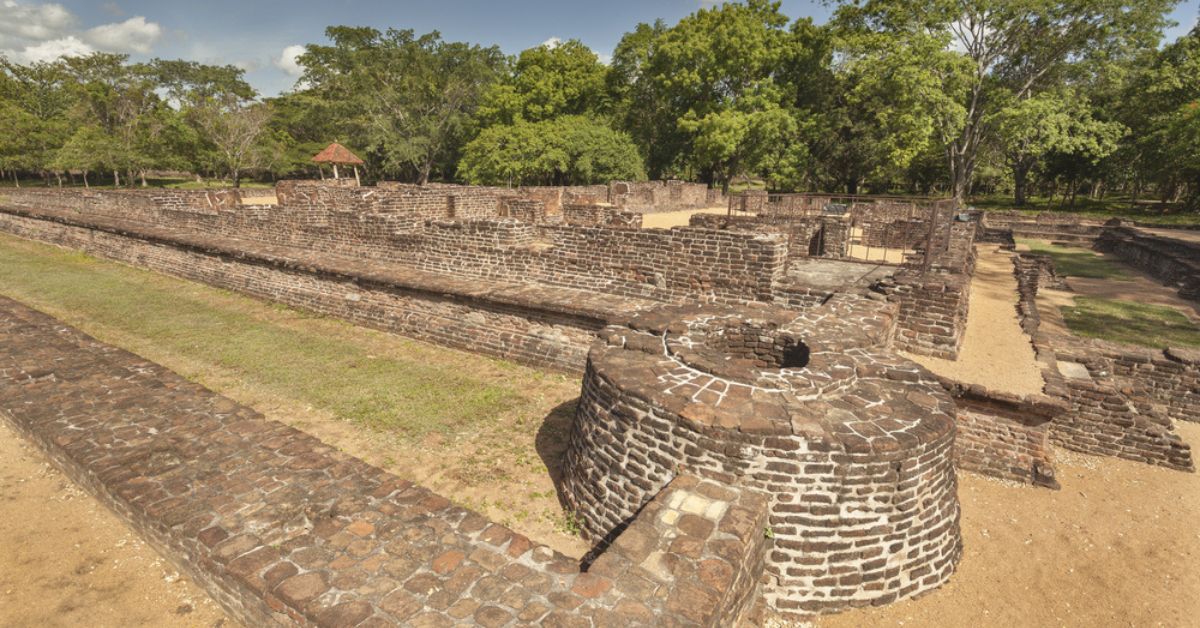
Panduwasnuwara
Kurunegala Lake is next to Kurunegala North and is placed in North Western, Sri Lanka. Kurunegala Lake has
a length of 3.68 kilometers. It is also known as Rantalia Lake or Kurunegala tank. It is a marvelous water body,
that is situated away from the metropolis traffic and on the brink of the main city
...
Description
Panduwasnuwara is an old city in the Kurunegala region that performed as the capital of Sri Lanka for a short
time. King Parakramabahu set up his provisional capital in this city during the 12th century.
During this time, Panduwasnuwara was the city home of the sacred tooth relic, which was brought back to Sri Lanka
from India by King Parakramabahu.
Although Panduwasnuwara is not as dramatic as the capital cities Anuradapura or Polonnaruwa, it is still worth
investigating if one gets the possibility.
The place, which contains the ruins of ancient structures, is spread over an area of 20 hectares, of which some
parts have still not been unearthed.
More Details about this Attraction
Panduwasnuwara is an ancient capital located in the Kurunegala District of Sri Lanka. Situated
approximately 19 km (12 mi) away from Wariyapola town, this historical site is believed to have
been the controlling centre known as Parakramapura of Dakkhinadesa during the 12th century, under
the rule of King Parakramabahu. Today, visitors can still witness the remaining ruins of this
ancient kingdom, primarily located in the Kotampitiya area along the Wariyapola-Chilaw main
road.
Name and Misconceptions
The current site of Panduwasnuwara has been identified as Parakramapura, the city of Dakkhinadesa,
founded by King Parakramabahu the Great when he was the sub-king of the territory. However, it is essential to note that
Panduwasnuwara has led to certain misconceptions among the locals. They mistakenly associate this site with the ancient capital
of King Panduwasadeva, who ruled the country from 504 BC to 474 BC.
According to local beliefs, the structure known as Chakrawalaya, situated within site, is considered the extreme or
circular tower where Princess Unmada Chitra was confined by her brothers. Additionally, the nearby village called
Dorabawa is believed to be the Doramadalawa village where Prince Pandukabhaya spent his childhood. However, it is
crucial to understand that these stories lack archaeological evidence to support their claims.
Another belief regarding the name Panduwasnuwara suggests that it originated from an old tank called Panda Wewa,
located nearby. While the exact etymology of the term remains speculative, it is clear that Panduwasnuwara holds an
important place in Sri Lanka's historical landscape.
History of Panduwasnuwara
Prince Parakramabahu, the successor of his uncle King Kirti Sri Megha, assumed rulership of
Dakkhinadesa in 1140 A.D. Panduwasnuwara became the first capital of Parakramabahu and one of
the three distinct kingdoms into which the island was divided at the time. Historical evidence
indicates that King Parakramabahu actively worked to develop the infrastructure and common
facilities within his ruling territory.
During his reign, Parakramabahu constructed a separate tooth temple at the Panduwasnuwara
Raja Maha Vihara premises to house the tooth relic of Buddha, ensuring its safety and
significance. After a series of successful battles with his enemies, Parakramabahu extended
his dominion over the entire nation and eventually moved his capital to Polonnaruwa, accompanied
by the revered tooth relic.
Ruins and Archaeological Significance
The ruins scattered across approximately 20 hectares of land in Panduwasnuwara belong to the 12th
century A.D. Within these ruins, visitors can explore remnants of a palace, monasteries, image
houses, dagobas, monks' living quarters, carved pillars, guard stones, and other ancient
constructions. The palace's remains are encircled by a moat and a brick rampart, bearing a
ground plan strikingly similar to King Parakramabahu's castle in Polonnaruwa.
One unique artifact within the palace premises is the Stone seat inscription. This slab
inscription records a visit by King Kirti Sri Nissankamalla (1187-1196 A.D.) to the palace during
one of his tours. The note adds further historical context to the importance and prominence of
Panduwasnuwara.
The ruins also encompass several monasteries built in the Panchayathana architectural style.
These monasteries contain stupas, image houses, Bodhigharas (tree shrines), and dwelling houses.
In addition to Sinhalese inscriptions, one monastery premises also houses a Tamil inscription dating back to the reign of Nissankamalla.
The modern temple, Panduwas Nuwara Raja Maha Vihara is situated in the heart of the ruins.
Within the temple grounds, visitors can observe a small Tempita Vihara (temple on pillars)
and several pillar inscriptions from the 9th to 10th century A.D., offering glimpses into the
rich historical tapestry of the region.
We encourage you to embark on a journey to Panduwasnuwara and immerse yourself in its rich
historical tapestry. Witness the remnants of palaces, monasteries, and other structures that
stood witness to a bygone era. By visiting Panduwasnuwara, you will gain a deeper appreciation
of Sri Lanka's ancient past and the significance of this great site.
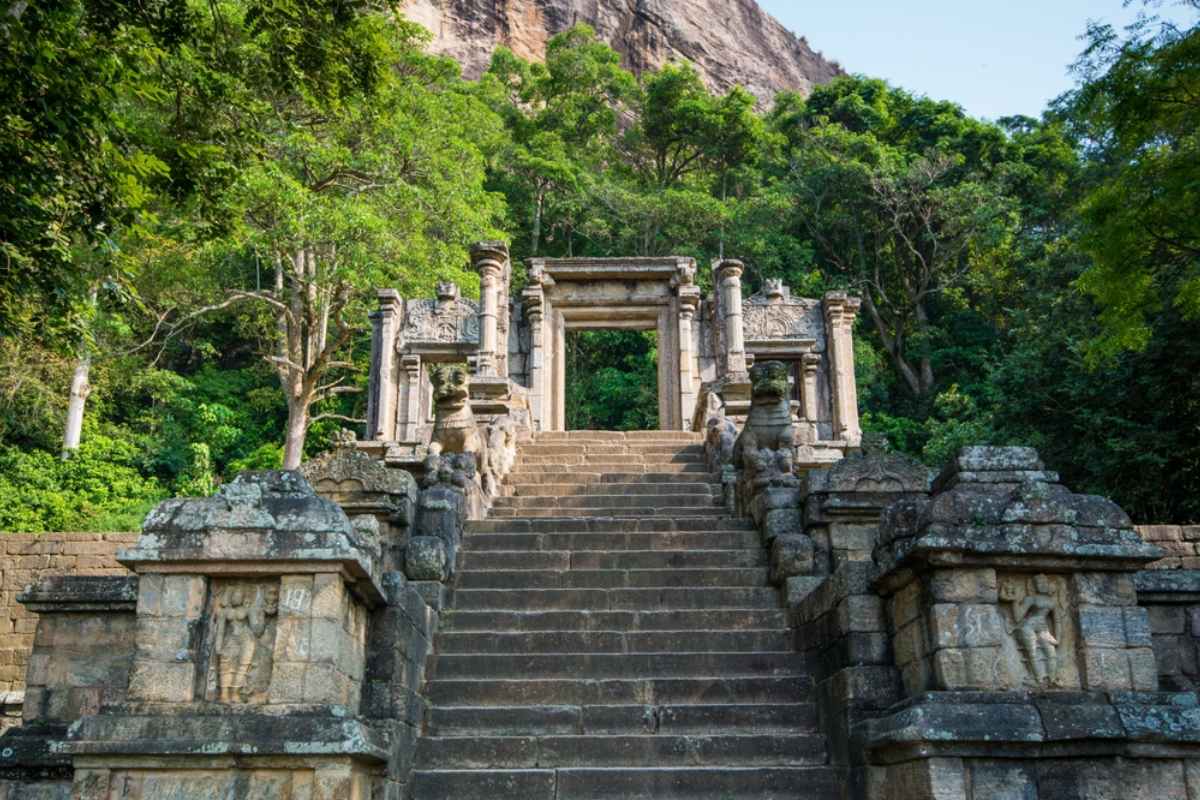
Yapahuwa
Yapahuwa is placed a short way from the Kurunegala-Anuradhapura road in the Wayamba region of Sri Lanka. Of all the old ruins in the country, the Rock Fortress Complex of Yapahuwa is held extraordinary even though it isn't famous with most visitors. But, it is distinguished as one of the most important archaeological places in the country.
...
It is even rumoured to be more prominent than The Rock Fortress in Sigiriya.
In the early 13th centenary, Yapahuwa was the country's capital, and it housed the Sacred Tooth Relic of the Buddha for 11 Years. King Bhuvanekabhu I, the son of King Parakramabahu, who at that time ruled Dambadeniya, was placed at Yapahuwa to guard the Country against Attackers; made the castle and the temple. After the Fortress was left, monks turned it into a monastery, and monks still reside among the ancient ruins. Even now, signs of early defence mechanisms can still be observed among the ruins.
On the peak of the rock, the remains of a stupa, a Bodhi tree, and a rock shelter/cave practised by Buddhist monks are visible. In addition, a couple of caves are observed at the base of the rock, one of which is a Buddhist Shrine, whereas another cave has some illustrations on it. Thus, the rock fortress has a remarkable similarity to the Sigiriya Rock Fortress.
More Details about this Attraction
Yapahuwa, a 300-foot isolated rock fortress in Sri Lanka, is a testament to the country's rich history. This ancient site, dating back to the 13th century, served as the seat of governance and housed the Sacred Tooth Relic of the Buddha. In addition, Yapahuwa boasts remarkable architectural features, including the renowned Chinese-looking 'Yapahuwa Lion' stone sculpture. While smaller in scale than Sigiriya, Yapahuwa's ornamental stairway and breathtaking surrounding vistas captivate visitors. This article delves into the fascinating history, unique attributes, and exploration of Yapahuwa, inviting readers to immerse themselves in the awe-inspiring remnants of a bygone era.
Historical Significance of Yapahuwa
Yapahuwa as Sri Lanka's Seat of Governance
During the 13th century, Yapahuwa was a significant centre of power in Sri Lanka. It was the capital of King Buvenekabahu's kingdom (1273-1284 AD) and a strategic location for governance. The city was enclosed by towering walls and a protective moat, with the palace situated on a lower level rather than at the rock's summit. Yapahuwa's prominence extended beyond its administrative role, as it housed the revered Sacred Tooth Relic of the Buddha.
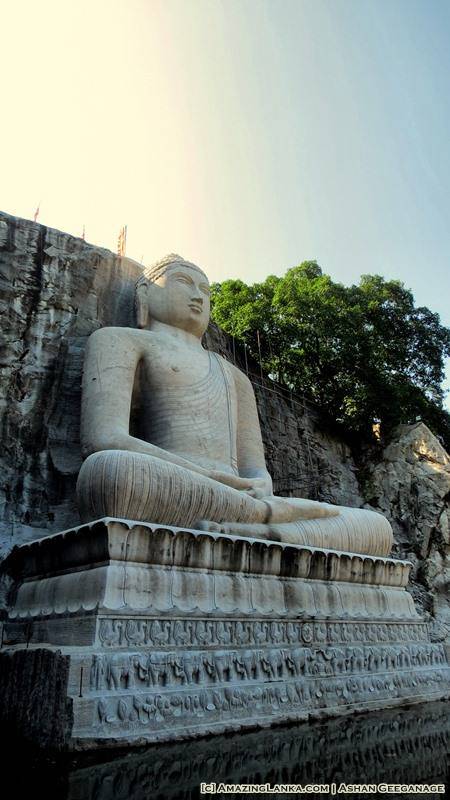
Rambodagalla Buddha statue
Rambodagalla Buddha statue is the most significant and highest rock-carved Samadhi Buddha statue in the world. This statue is 67.5 feet tall, and the entire statue is made from one large granite located on Rambodagalla Monaragala temple in Kurunagala district.
...
The Rise of a Bamiyan Buddha in Ridigama
In the tranquil village of Rambadagalla in Ridigama in the Kurunegala District, a huge stone sculpture is taking shape. This is no ordinary sculpture but one modeled on the Bamiyan Buddha in Afghanistan which was destroyed by the Taleban in 2001.
Why a replica of the Bamiyan Buddha is being sculpted in the Kurunegala hillside is itself a tale worth relating. It was in the aftermath of the Taleban’s act, which outraged the world, that the agitated village youth met their priest demanding that some action be taken. Ven. Egodomulla Amaramoli Thera gave them a patient hearing and resolved to harness the feelings of the youth. The next day, he called a meeting at which he suggested the building of a replica of the Bamiyan Buddha in the village itself to show the world a positive response to a tragic act. The children of the village spurred into action, collected Rs. 1,358, and handed it over to the Thera.
Such were the beginnings of this mammoth project – the building of a 67.5-foot granite statue which has now attracted the support of people from different communities and all walks of life.
Hearing that a group of Indian sculptors had just completed work at Ramboda, Thera contacted Colombo businessman D. Easwaren who enlisted the help of architect R. Sivaram to produce a blueprint. Former Indian High Commissioner Nirupama Rao herself visited the site and this was followed by a Rs. 2.5 million donation from the Indian High Commission to the project.
Director of a leading business Nandadasa Rajapaksa, a devout Buddhist is also playing an active role in raising funds for the project. He strongly feels that the project completion will help in building stronger ties between India and Sri Lanka and fostering peace in the region.
World's Largest Sedentary Buddha Statue being carved out of Granite at Rambodagalla Viharaya in Kurunegala
World's Largest Sedentary Buddha Statue being carved out of Granite at Rambodagalla Viharaya in Kurunegala
Advisor on Religious Sites and Temples to the Indian government Shri Muthu Muttiah Sthapathy, introduced to the project by Mr. Easwaren has brought in experienced sculptors from Chennai to work on the statue. Meanwhile, donations have been received from many, including President Mahinda Rajapaksa who contributed Rs. 2.5 million.
The Rambadagalla Buddha statue was finally completed and ceremoniously opened on the 30th of April 2015 by President Maitreepala Sirisena making this the largest sedentary Buddha Statue carved out of granite in the world.
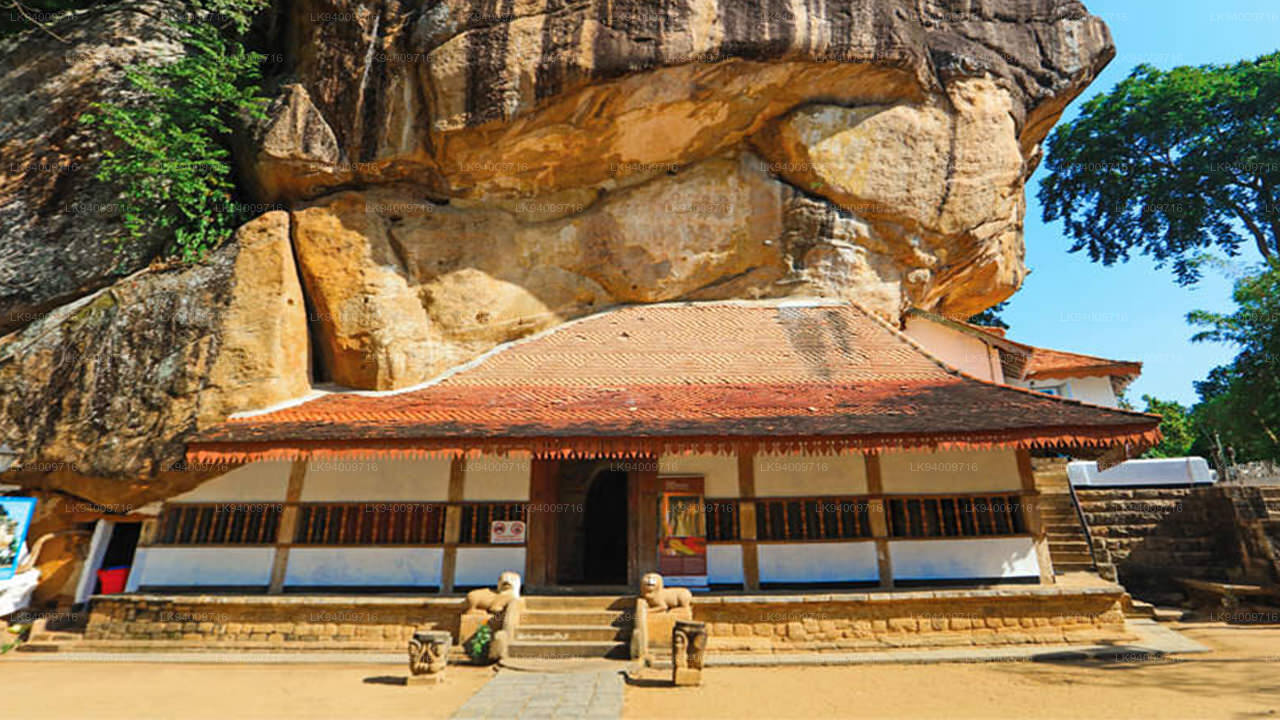
Ridi Viharaya Temple
Ridi Viharaya Temple was built where Silver ore was found, used to create Ruwanweli Dagoba at Anuradhapura by King Dutugemunu during his reign.
Ridi Vihara is an important Raja Maha Vihara referring to the Cultural Triangle. Historical Data on this Monastery complex is observed in amazing Caves written in Brahmin Inscriptions. They date posterior to the 2nd and 3rd Centuries BC. Throughout the time of Arahat Mahinda, many Arahaths are assumed to have resided in these caves, which numbers around twenty-five in the neighbouring area of Ridi Vihara and Rambadagalla area. The caves had been made by carving into the rock and donated by chieftains of the place to the Sangha.
...
History of Ridi Viharaya
Ridi Viharaya was constructed during the reign of Dutthagamani of Anuradhapura, a renowned Sinhalese king of ancient Sri Lanka. Dutthagamani, known for his victory over the Tamil prince Ellalan of the Chola Kingdom, initiated the construction of Ruwanwelisaya, a monumental stupa that stands tall today. The completion of Ruwanwelisaya required various materials, including silver.
During this time, a group of merchants travelling from the central highlands of Sri Lanka to Anuradhapura stumbled upon a jackfruit tree in the Ridigama area. As part of a ritual, they offered the fruit's first half to Buddhist monks. To their amazement, four Arhat monks appeared and accepted their offering. Then, four more monks arrived and did the same. After partaking in the jackfruit, the final monk, Arhat Indragupta, guided the merchants to a cave where silver ore was found.
Excited by the news, the merchants informed Dutthagamani upon reaching Anuradhapura. The silver ore they discovered provided the necessary material for completing Ruwanwelisaya. In gratitude for this significant finding, Dutthagamani built the Ridi Viharaya complex on the site of the silver ore. The construction involved 300 masons and 700 other workers, including the chief artisan Vishwakarma Prathiraja.
Location of Ridi Viharaya
Ridi Viharaya is located in Ridigama, approximately 18 kilometres northeast of Kurunegala. Kurunegala is located 94 kilometres northeast of Colombo, the capital of Sri Lanka. The temple can be found about 10 kilometres from Ibbagamuwa, along the A6 highway that connects Kurunegala and Dambulla.
The Temple Complex
Ridi Viharaya boasts a complex that houses approximately twenty-five caves. These caves have been considered the abode of Arhat monks since the arrival of Arahat Mahinda in the 3rd century BCE. Over time, the temple experienced periods of decline and revival. However, in the 18th century CE, the temple complex was revitalised during the reign of Kirti Sri Rajasinha of Kandy. Adding Uda Viharaya and connected devices such as Kumara Bandara Devalaya and Paththini Devalaya further enriched the temple.
Associated Buildings and Structures
Within the premises of Ridi Viharaya, several notable buildings and structures can be explored. One such structure is the Serasum Gala, a rock to the right of the entrance, believed to be the original site of the temple. It is said that Dutthagamani used to dress there before worshipping at the temple. On top of this rock, a small stupa can be found.
Another significant building is Waraka Welandu Viharaya, which dates back to the Polonnaruwa era. This building is associated with the merchants who offered jackfruit to the Arhat monks. The name "Waraka Welandu Viharaya" refers to the consumption of jackfruit. The building is constructed in stone and displays Kandyan-era paintings. Its stone roof is supported by intricately carved pillars featuring designs on all four sides, including depictions of female dancers influenced by Hindu art.
The Hevisi Mandapaya, situated in front of the Maha Viharaya, is a pavilion that contains a rice bowl and various historically significant objects. One notable item displayed here is a centuries-old Pallakkiya used to carry elderly monks.
Maha Viharaya, the main temple, is located inside the Rajatha Lena, a massive rock resembling the head of a cobra. This cave is believed to be the original site where the silver ore was discovered. The Maha Viharaya houses numerous Buddha statues, including a 9-meter recumbent Buddha and an ancient gold-plated Buddha statue from the Anuradhapura era. In addition, the temple's walls and roofs are adorned with intricate paintings.
Uda Viharaya, the upper temple, belongs to the Kandyan era. It contains a seated Buddha statue with a unique Makara Thorana and a semi-circular Sandakada pahana (moonstone). The Sandakada pahana is distinctive, featuring two dragons on either side of Lord Buddha's shoulders, unlike similar designs' more common triangular shape. In addition, the chamber of Uda Viharaya showcases paintings of mythological animals and the prominent character Ravana from the Ramayana. Adjacent to this temple is a Hindu deva laya dedicated to the protector god of the area.
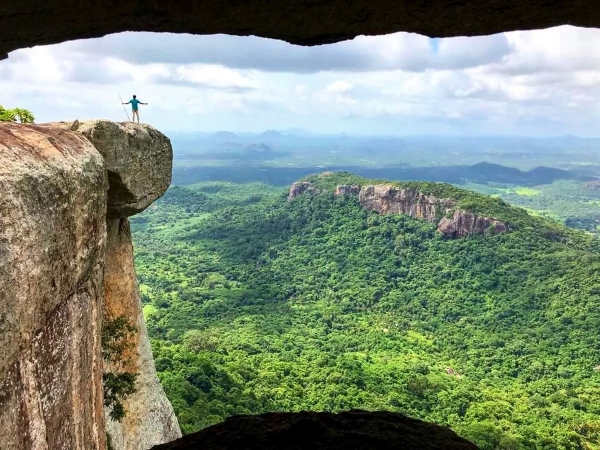
Dolukanda
Various evidence suggests that Dolukanda was used as a herbal garden back in the day. King Buddhadasa( 341 AD- 370 AD ), who was also a medical practitioner used Dolukanda as his herbal garden. According to ancient myths, the history of Dolukanda dates even further than the 4th century.
...
In Ramayana Legend
Dolukanda is also referred to as Dolukanda Sanjeevani mountain, due to the myths about the mountain’s origin. In Hinduism, Sanjeevani is a magical herb that can revive a person who is close to death. It is said that during Lord Rama’s war with Ravana, Lakshman, brother of Rama, was badly wounded. To cure Lakshman, Hanuman was called to bring Sanjeevani from a certain part of the Himalayas. It is said that Hanuman, who forgot the name of the herb, lifted the entire section of the mountain and brought it here. It is believed that parts of the mountain fell at 5 different places in Sri Lanka, which are now called as Sanjeevani drops. Dolukanda is one such place in Sri Lanka. Hence, Dulukadna is a part of the Ramayana trail in Sri Lanka.
How to get to Dolukanda mountain?
There are 2 routes to access Dolukanda.
1.Kurunegala –> Muththettugoda junction –> Ganewatta –> 10th mile post –> Hunupola village –> Dolukanda
2.Kurunegala –> Ibbagamuwa –> Madagalla road –> Godagala –> Arankale –> Doluwa –> Dolukanda
Dolukanda is designated as a reserve under Forest Department. It is advised to take a special permit to climb the mountain. And also inform the thero of the Dolukanda temple. The trek to the mountain is moderately difficult. It is recommended to go as groups and not to bring senior citizens and kids. Beware of wild boars, serpents, and wasp attacks.